Logistics Insights &
Global Supply Chain News
Industry Trends &
Expert Trade Knowledge
2026 Best Customs Clearance Brokerage Services Guide
The 2026 Best Customs Clearance Brokerage Services Guide examines how brokers support accurate, timely, and compliant international shipments. Customs clearance now involves more than submitting an entry form. It requires consistent classification, complete commercial invoices, verified origin details, and reliable communication with carriers and authorities.
The World Bank’s 2023 Logistics Performance Index lists customs clearance as a core measure of supply-chain efficiency. Its findings show that predictable border procedures strongly influence logistics performance. UNCTAD’s Review of Maritime Transport also reports that over 80% of global merchandise trade moves by sea. That scale makes professional clearance support especially valuable. A single missing data field can delay a container, disrupt inventory planning, or create unexpected storage charges. The details matter.
Experienced brokers help importers review HS codes, valuation records, certificates, and shipment instructions before filing. They also monitor entry status and explain documentation gaps in practical language. However, no provider is perfect. A broker may offer broad coverage yet lack strong expertise in a specific product category or destination market. This guide therefore compares Customs Clearance Brokerage Services through measurable criteria, including regulatory knowledge, technology, response times, transparency, and service experience.
The OECD Trade Facilitation Indicators emphasize the importance of streamlined procedures and coordinated border processes. These principles provide a useful benchmark for evaluating brokerage performance in 2026. Readers should still verify current requirements with the relevant customs authority and qualified local professionals. Rules change. Careful review remains essential.
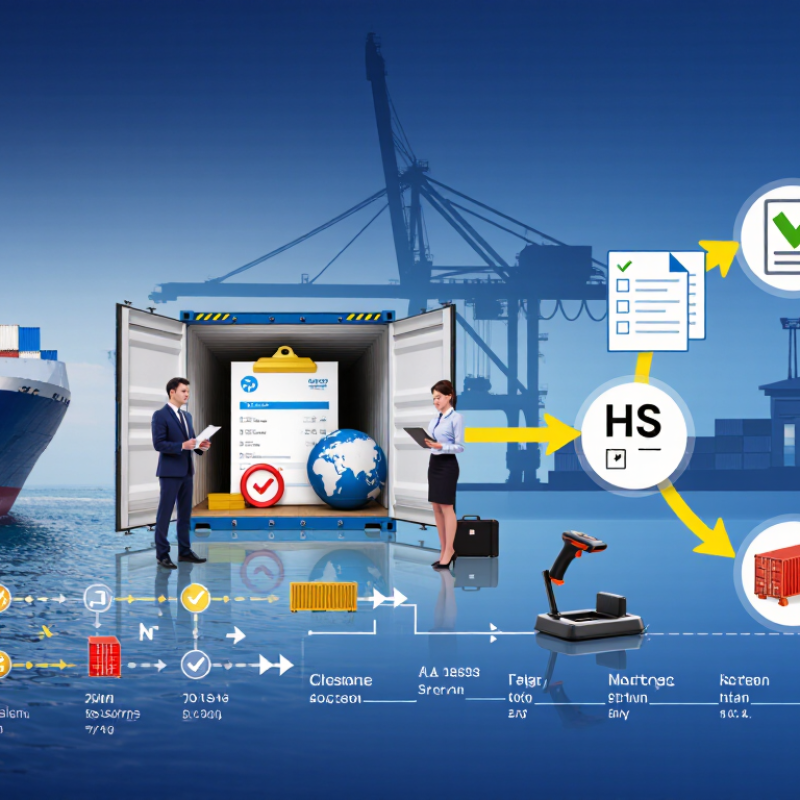
What Customs Clearance Brokerage Services Include
2026 Best Customs Clearance Brokerage Services Guide
What Customs Clearance Brokerage Services Include
Customs clearance brokerage services manage the paperwork and communication required for goods to enter or leave a country. A broker reviews commercial invoices, packing lists, transport documents, and product descriptions. They also help assign accurate tariff classifications and estimate duties, taxes, and handling charges. One missing detail can delay a shipment for days.
Experienced brokers communicate with customs authorities, carriers, warehouses, and importers. They may prepare electronic declarations, answer inspection questions, and coordinate cargo release after approval. Their work also includes checking valuation, origin information, permits, and recordkeeping requirements. Rules differ by country, product type, and shipment value, so generic advice is rarely reliable.
Tips: Provide clear product descriptions, correct quantities, and consistent invoice values. Keep supplier records and shipping documents together. Ask the broker to explain unusual fees before payment. Do not assume the lowest quote covers every service. A rushed classification can create avoidable costs, even when the shipment seems simple. Brokers can make mistakes too, so review key entries before submission. A second check may feel unnecessary, but it can reveal a wrong unit, weight, or country of origin.
2026 Best Customs Clearance Brokerage Services Guide: What Services Include
This chart maps the typical core activities handled by a customs clearance broker across the shipment lifecycle. The figures represent the number of activities in each service stage, not market share or company performance. Exact requirements vary by country, commodity, transport mode, and shipment value.
How to Evaluate a Customs Clearance Broker
A reliable customs clearance broker should explain its process in plain language. Ask who reviews product descriptions, tariff classifications, origin details, and declared values. These details affect clearance accuracy, landed costs, and shipment timing. Request a sample document checklist before signing an agreement. A serious broker should identify missing information early, not after cargo reaches the border.
Check the broker’s practical experience with your shipment type and trading routes. Ask how it handles customs questions, inspections, classification disputes, and urgent document corrections. Response standards matter. For example, a clear contact person should acknowledge a query within one business day. Review its authorization, professional training, internal controls, and recent client references. Look for an audit trail showing who changed each declaration and when.
Transparency is essential. The fee schedule should separate service charges, government assessments, storage risks, and possible extra work. Cheap is not always efficient. I would question any promise of guaranteed clearance, because customs decisions remain outside the broker’s control. No broker gets every answer right. The better question is whether mistakes are reported quickly, corrected carefully, and used to improve procedures. A short trial shipment can reveal more than a polished sales presentation. Check the final entry against the invoice, packing list, and transport record. Small mismatches often expose weak review habits.
Documents and Information Required for Customs Clearance
2026 Best Customs Clearance Brokerage Services Guide: Documents and Information Required for Customs Clearance
Accurate documents remain the foundation of customs clearance. Prepare a commercial invoice, packing list, bill of lading or air waybill, and purchase order. Add the correct HS code, declared value, currency, country of origin, and Incoterms. Customs authorities may also request importer identification, product specifications, insurance details, or certificates of origin.
Small mismatches create real delays. The invoice may show 1,000 units, while the packing list shows 980. Fix that before submission. A broker should compare product descriptions across every document, not simply upload files.
The World Bank’s Logistics Performance Index 2023 evaluates customs efficiency, infrastructure, and shipment reliability. These factors directly influence clearance predictability. The OECD Trade Facilitation Indicators report estimates that comprehensive reforms could reduce trade costs by 12.5% to 17.5% in many economies.
Keep records in a clear digital folder. Include supplier contacts, transport references, valuation notes, and previous customs rulings when available. Translations may be necessary for technical descriptions. Requirements still vary by destination and product category. A checklist helps, but it is not perfect. Human review remains important when classification or valuation seems uncertain. Missing one detail can outweigh ten correct documents.
The Step-by-Step Customs Clearance Process
In 2026, customs clearance starts before cargo reaches the border. Confirm the product description, tariff classification, customs value, origin, and required permits. A professional broker should compare commercial invoices with packing lists. Small mismatches can trigger inspections or delays. They still happen.
Submit the import declaration through the relevant customs system. Authorities review the data, calculate duties and taxes, and assign a risk channel. Low-risk shipments may clear quickly. Others need document checks or physical examination. The World Trade Organization estimates that full implementation of its Trade Facilitation Agreement could reduce trade costs by 14.3%. Accurate data makes that benefit more achievable. The World Bank’s Logistics Performance Index 2023 also highlights customs efficiency as a major factor in supply-chain reliability.
Tips: Build a document checklist for every shipment. Include the invoice, packing list, transport document, origin evidence, and classification rationale. Keep digital records together. Ask the broker to flag unclear descriptions before submission. Do not rely only on historical classifications; tariff rules and local procedures can change. Track the declaration until customs releases the goods, then reconcile duties, taxes, and delivery records. A short review after each shipment helps reveal repeated errors. It may feel excessive, but one missing field can cost more than the review itself.
Costs, Compliance Risks, and Service Performance Factors
Choosing a customs clearance broker requires more than comparing entry fees. In practice, the cheapest quote may exclude inspections, storage, disbursement, or post-entry corrections. Request a line-item schedule and a written explanation of variable charges. The 2023 World Bank Logistics Performance Index reported an average customs score of approximately 2.2 out of 5. That gap signals uneven clearance quality across markets.
Performance depends on data discipline. Brokers should validate HS classification, declared value, origin evidence, and shipment documents before filing. Small errors can trigger holds, reassessments, or audit exposure. UNCTAD’s Review of Maritime Transport 2024 notes that maritime shipping carries over 80% of global merchandise trade by volume. Congestion therefore magnifies compliance mistakes and delay costs. Not every delay is the broker’s fault, but weak exception handling still deserves scrutiny.
Measure first-pass entry accuracy, average release time, response time, correction frequency, and inspection outcomes. The World Bank estimated that stronger trade facilitation could reduce global trade costs by 14.3%. That is an opportunity, not a guarantee. I have seen dashboards look impressive while customers lacked shipment-level explanations. A better review samples actual entries, checks escalation records, and tests after-hours support. No metric is perfect. A broker that admits data gaps may be more reliable than one promising flawless clearance.
2026 Best Customs Clearance Brokerage Services Guide - Costs, Compliance Risks, and Service Performance Factors
| Service Model | Typical Cost Structure | Indicative Clearance Time | Required Data and Documents | Primary Compliance Risks | Key Performance Factors | Best Fit |
|---|---|---|---|---|---|---|
| Express or parcel clearance | Usually included in the carrier’s shipping or clearance charge; additional government duties, taxes, disbursement fees, storage, or special-entry charges may apply. | Often same day to 2 business days after complete and accurate documents are received; customs holds can extend the period. | Commercial invoice, transport document, accurate description, quantity, value, origin, consignee, and any required permits. | Incomplete descriptions, incorrect value, restricted goods, missing permits, and misuse of simplified or low-value procedures. | Document completeness, first-pass acceptance, response speed, exception alerts, and transparent disbursement charges. | Low-volume, time-sensitive, and standardized shipments. |
| Standard commercial entry | Usually a fixed entry or shipment fee, sometimes combined with line-item, invoice, duty-advancement, or after-hours charges. | Approximately 1 to 3 business days after arrival when the entry package is complete and no examination is ordered. | Commercial invoice, packing list, bill of lading or airway bill, tariff classification, origin, importer details, and customs authorization. | Incorrect tariff classification, undervaluation, origin errors, missing importer registration, and inconsistent invoice data. | Entry accuracy, release time, duty-and-tax estimate accuracy, document review quality, and post-entry correction handling. | Routine imports with repeatable products and normal shipment volumes. |
| Complex or multi-line entry | Base entry fee plus possible additional lines, classification review, valuation analysis, origin review, or special handling charges. | Approximately 2 to 5 business days for document review; inspections, queries, or permit checks may add more time. | Detailed product specifications, material composition, intended use, purchase terms, assists, royalties, freight, insurance, and origin evidence. | Misclassification, incorrect customs value, preferential-origin errors, antidumping or countervailing duties, and regulatory agency controls. | Classification depth, escalation expertise, query-resolution time, audit trail quality, and consistency across entries. | Machinery, components, chemicals, food, medical products, and mixed-product consignments. |
| High-volume or automated clearance | Negotiated per-entry, per-line, subscription, or transaction-based pricing; integration, data mapping, and exception-management charges may be separate. | Same day to 2 business days for clean, pre-arrival data; system or data-quality failures can create batch delays. | Structured SKU master data, tariff codes, origin, valuation rules, party data, permits, shipment data, and authorization records. | Systematically repeated errors, weak master-data governance, unauthorized changes, duplicate entries, and insufficient audit controls. | Automation rate, exception rate, data-validation controls, API or EDI uptime, dashboard visibility, and root-cause correction. | Retail, manufacturing, distribution, and recurring cross-border supply chains. |
| Temporary import or re-export | Entry fee plus possible guarantee, carnet, bond, permit, amendment, inspection, and re-export documentation charges. | Approximately 2 to 7 business days depending on the temporary procedure, guarantee, and customs review. | Purpose, ownership, serial numbers, intended duration, re-export plan, guarantee details, and evidence of unchanged goods where required. | Failure to re-export on time, unauthorized use, missing discharge evidence, incomplete serial-number records, and conversion to permanent import. | Deadline monitoring, inventory control, guarantee management, re-export proof, and closure confirmation. | Exhibitions, professional equipment, samples, repairs, and project cargo. |
| Duty drawback, refund, or post-entry support | Project fee, hourly advisory fee, contingency fee, or per-claim charge; government filing and record-production costs may also apply. | Several weeks to several months, depending on claim type, records, customs review, and local statutory deadlines. | Entry records, export records, payment evidence, manufacturing or inventory records, product identity, and proof supporting eligibility. | Unsupported claims, missed filing deadlines, weak traceability, duplicate claims, and incomplete accounting records. | Claim accuracy, recovery rate, documentation completeness, review-cycle time, and audit defensibility. | Exporters and manufacturers with eligible imported inputs or recurring overpayment exposure. |
| Compliance advisory and trade consulting | Hourly, project-based, retainer, or fixed-scope pricing for classification, valuation, origin, licensing, audit, and policy work. | Several days for a focused review; several weeks or longer for a classification database, internal-control program, or audit remediation. | Product technical files, transaction records, contracts, bills of materials, origin documents, policies, and prior entry data. | Conflicting tariff opinions, unsupported preferential origin, sanctions or export-control exposure, and inadequate governance. | Written rationale, review coverage, issue prioritization, corrective-action closure, training quality, and audit-readiness. | Businesses entering new markets or managing regulated, high-value, or high-risk goods. |
FAQS
The broker should explain product descriptions, tariff classifications, origin details, and declared values. Ask for a sample document checklist. Missing information should be identified before cargo reaches the border.
Ask about your shipment type and trading routes. Discuss inspections, classification questions, urgent corrections, and document problems. A clear contact should normally acknowledge questions within one business day.
Request an audit trail showing who changed each declaration and when. Review authorization, training, internal controls, and recent client references. Records matter.
Request a line-item fee schedule. It should separate service charges, government assessments, storage risks, disbursements, and extra work. A low quote may exclude important costs.
Prepare the commercial invoice, packing list, transport document, origin evidence, and classification rationale. Keep digital records together. Check that descriptions and quantities match across documents.
Customs reviews the data, calculates duties and taxes, and assigns a risk channel. Some shipments clear quickly. Others require document checks or physical examination.
Track first-pass accuracy, average release time, response speed, correction frequency, and inspection outcomes. Also review shipment-level explanations. Attractive dashboards can still hide weak service.
No broker controls every customs decision. Question guaranteed-clearance promises. A stronger test is whether mistakes are reported quickly, corrected carefully, and used to improve procedures.
Yes, a short trial can reveal more than a polished presentation. Compare the final entry with the invoice, packing list, and transport record. Small mismatches matter.
Reconcile duties, taxes, delivery records, and the final customs entry. Record repeated errors and review them after each shipment. The process may feel excessive, but one missing field can cost more than the review.
Conclusion
This guide explains how Customs Clearance Brokerage Services help businesses manage the import and export process efficiently and accurately. It covers core services such as preparing declarations, classifying goods, calculating duties and taxes, coordinating with authorities, and monitoring shipment status. Readers will also learn how to evaluate a broker by reviewing experience, communication, compliance knowledge, technology, service coverage, and performance standards.
The article outlines the documents and information commonly required, including commercial invoices, packing details, transport records, product descriptions, and applicable permits. It then presents the customs clearance process step by step, from document collection and classification to submission, review, payment, release, and recordkeeping. Finally, it discusses cost factors, potential compliance risks, processing delays, transparency, and service quality, helping businesses choose a reliable partner and build a consistent, well-organized customs clearance strategy.
Blog Tags: