Heavy Lift Project Cargo Logistics is built around moving cargo that ordinary freight systems cannot handle. Think of a turbine nacelle arriving at a port, a refinery vessel weighing hundreds of tonnes, or a bridge section traveling by barge and road. Each shipment calls for more than a large crane. It needs route surveys, engineered lift plans, suitable vessels, permits, and close coordination between ports, carriers, and site teams. Cargo dimensions, centre of gravity, lifting points, and ground-bearing pressure shape the engineering from day one. A millimetre can matter beneath a low bridge. At the quay, teams check crane reach, deck strength, sea fastening, and weather windows. Small oversights become costly delays.
This overview of the Top 10 Heavy Lift Project Cargo Logistics Companies introduces providers with capabilities relevant to complex industrial projects. Company scale alone does not tell the full story. Experience with similar cargo, access to specialized equipment, regional coverage, safety practices, and clear project communication all matter. A strong operator should explain how it assesses load limits, sea conditions, transport clearances, and contingency options before cargo moves. Details matter.
The comparison is a practical starting point, not a universal ranking. Project requirements vary, and a company suited to an offshore module may not fit a remote wind farm or tight urban delivery. A project may also involve inland waterways, temporary road closures, or transfers between transport modes. Published fleet data can leave questions about availability, local partners, and execution quality. Those gaps deserve scrutiny. By examining what each provider can plan and deliver, readers can build a more informed shortlist and ask better questions before appointing a logistics partner.
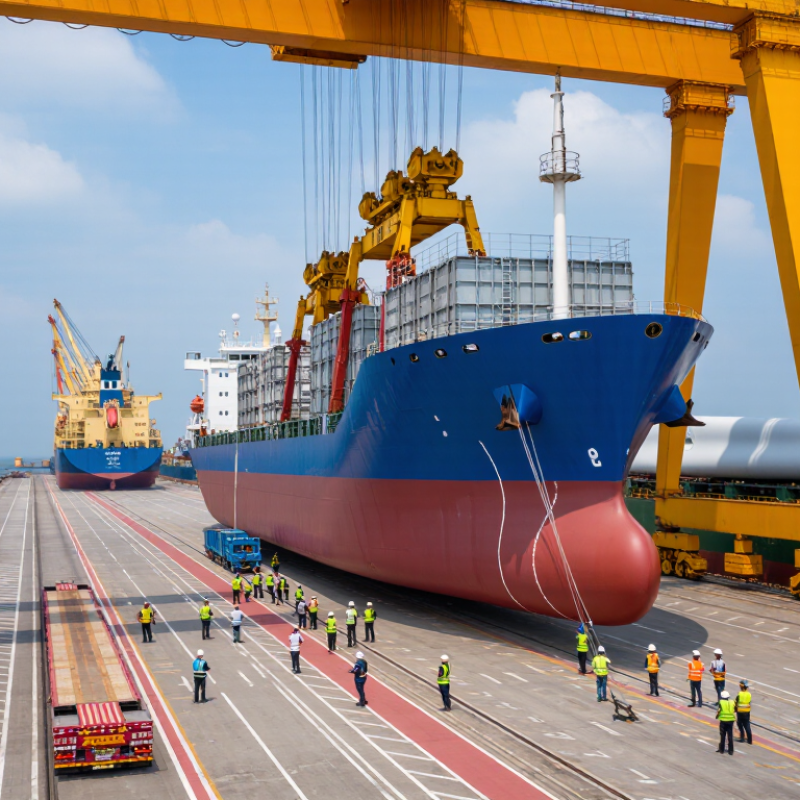
Defining Heavy Lift Project Cargo Logistics
Heavy lift project cargo logistics is the coordinated planning and movement of unusually heavy, oversized, or difficult-to-handle equipment. It involves more than arranging a truck or vessel. Each shipment needs a practical plan for lifting, securing, transporting, and placing the cargo at its destination. Turbines, industrial vessels, and large transformers are typical examples.
The work begins with reliable cargo data: weight, dimensions, center of gravity, and approved lifting points. Specialists use these details to select cranes, trailers, lifting frames, and suitable routes. A road survey may uncover a low bridge, a tight turn, or a weak section of pavement. Small clearances matter. For a 120-ton transformer, even the position of its lifting points can affect the rigging plan. Port handling, sea conditions, weather limits, and the final site’s ground strength also shape the sequence.
Coordination keeps separate stages connected, from factory collection to installation. Plans can change. A late drawing or an underestimated access constraint may force a new lift arrangement, so assumptions should be checked rather than treated as facts. Not every move has a perfect solution; sometimes the safest plan is slower, costlier, or less elegant than expected.
How Leading Project Cargo Companies Are Selected
Selecting a heavy lift project cargo logistics company requires more than comparing freight rates. The World Bank’s 2023 Logistics Performance Index evaluates six areas, including infrastructure, logistics competence, tracking, and timeliness. These are useful screening criteria, but heavy lifts need additional proof. Ask for recent experience with similar cargo dimensions, lifting plans, route surveys, and documented safety performance. Can the team show how it handled a narrow port approach or a crane setup on soft ground? Details matter.
Operational resilience deserves equal weight. UNCTAD’s Review of Maritime Transport 2024 reports that seaborne trade grew 2.4% in 2023, while disruptions and rerouting created pressure across shipping networks. For project cargo, check how a provider secures suitable vessels, confirms lifting equipment, and manages schedule changes. Request a sample project schedule, including weather allowances, handover points, and contingency options. Small gaps can become expensive delays.
References should be specific and verifiable. Speak with clients whose cargo had comparable weight, center of gravity, and delivery constraints; ask about damage, communication, and cost changes. Review subcontractor oversight and insurance documentation, too. A polished proposal is not evidence. Frankly, scorecards can create false confidence if teams reward low prices over engineering quality. No selection method is perfect; record why trade-offs were accepted, and revisit them before mobilization.
Top 10 Heavy Lift Project Cargo Logistics Companies - How Leading Project Cargo Companies Are Selected
Selection framework: The criteria below describe an illustrative way to assess providers; the percentage allocations are suggested evaluation weights, not independently verified company rankings. Compare providers using project-specific evidence and consistent scoring.
| No. |
Selection criterion |
Suggested weight |
Evidence to review |
| 1 |
Heavy-lift and out-of-gauge expertise |
16% |
Relevant project references; cargo dimensions and weights handled; lift studies; equipment selection; and documented execution plans for comparable cargo. |
| 2 |
Engineering and transport planning |
14% |
Engineering capability for route and site surveys, load distribution, lifting arrangements, transport configurations, and interface planning across transport modes. |
| 3 |
Safety and risk management |
13% |
Project-specific risk assessments, method statements, incident reporting, emergency procedures, personnel training, and applicable safety management certifications. |
| 4 |
Multimodal execution capability |
11% |
Ability to coordinate relevant combinations of ocean, river, rail, road, and inland-waterway transport, including transfer points and handovers. |
| 5 |
Equipment access and suitability |
10% |
Demonstrated access to suitable cranes, trailers, barges, lifting gear, and other equipment, with capacity and availability matched to the proposed operation. |
| 6 |
Route, permits, and regulatory compliance |
9% |
Route feasibility checks and a clear plan for required permits, escorts, port or terminal approvals, customs formalities, and cargo-specific regulatory requirements. |
| 7 |
Project management and schedule control |
8% |
A named project team, defined responsibilities, milestone schedule, interface register, progress reporting, and contingency planning for schedule risks. |
| 8 |
Geographic coverage and local coordination |
7% |
Relevant operational presence or qualified local partners along the proposed route, with clear arrangements for communications and operational accountability. |
| 9 |
Insurance and contract transparency |
6% |
Current evidence of applicable insurance, clearly stated liability terms, defined scope of work, exclusions, subcontracting arrangements, and claims procedures. |
| 10 |
Quality, environmental, and security controls |
6% |
Documented quality and environmental processes; relevant certifications where applicable; cargo security measures; and controls for subcontractors and handovers. |
Profiles of Ten Heavy Lift Logistics Companies
Heavy-lift logistics providers are distinguished by engineering depth, not fleet size alone. Strong teams coordinate load studies, route surveys, crane selection, port handling, and sea-fastening. The International Energy Agency’s World Energy Investment 2024 estimated global energy investment would exceed US$3 trillion, with about US$2 trillion directed to clean energy. GWEC’s Global Wind Report 2025 recorded 117 GW of new wind capacity installed in 2024. These projects need precise transport plans. Small errors can cause costly delays.
The ten profiles below describe distinct provider strengths, without ranking named businesses. A global forwarder coordinates multimodal project schedules. A crane-and-transport integrator pairs lifting plans with self-propelled modular transporters. A heavy-lift ship operator specializes in deck capacity and cargo securing. An engineering-led rigger focuses on lift studies and center-of-gravity checks. A port specialist manages quay access, laydown space, and transfer equipment.
A wind-project carrier handles long blades and nacelles. An energy-sector logistics provider plans delivery of generators and transformers. An inland-waterway operator moves oversized cargo by barge. A regional specialist knows local road limits and bridge clearances. A modularization expert separates large plant units into transportable sections. Plans matter. Yet capability varies by route, equipment availability, and site conditions; a polished proposal cannot guarantee smooth execution.
Heavy Lift Project Cargo: A 100-Tonne Load in Common Units
A 100-metric-tonne reference load equals 100,000 kilograms, approximately 110.23 US short tons, or 98.42 UK long tons. These equivalent values help teams communicate cargo weights across international transport projects.
Specialized Equipment and Engineering Capabilities
A credible comparison of heavy-lift project cargo companies should look beyond fleet size. Specialized equipment must match the cargo, route, and site conditions. Self-propelled modular transporters can move oversized loads in tight formation, while hydraulic gantries or strand jacks may support controlled lifting where cranes cannot reach. The right choice depends on load weight, dimensions, center of gravity, and available ground strength. Equipment alone is not enough.
Tips: Ask for a method statement, lift plan, and equipment capacity checks. Confirm that route surveys include bridge limits, turning space, and overhead clearances. Small details matter.
Strong engineering teams model load paths and check ground-bearing pressures before mobilization. They coordinate transport, lifting, and placement so each stage works with the next. A detailed plan should identify clear hold points, communication roles, and fallback options. Plans change. Site access may prove tighter than drawings suggest, or foundations may need extra protection. A capable company should explain those uncertainties plainly, rather than imply every move is routine. Compare how providers document assumptions, review risks, and adapt equipment configurations. Even experienced teams can miss a constraint; early, honest review makes that less likely.
Industries and Projects Served Worldwide
Heavy lift project cargo serves industries where oversized equipment cannot travel as ordinary freight. In energy projects, logistics teams move turbine sections, transformers, and offshore modules from manufacturing sites to remote locations. Mining developments may require crushers and processing vessels delivered across long inland routes. Infrastructure work adds bridge girders, tunnel equipment, and large construction cranes to the mix. Each cargo type brings different lifting points, weight limits, and handling needs.
Industrial projects often depend on careful coordination between engineers, carriers, port operators, and site crews. A route survey can reveal low bridges, weak roads, or turning areas too tight for a multi-axle trailer. At the port, crane capacity and vessel schedules shape the loading plan. Details matter. Weather windows can also affect transfers, especially when cargo moves between a ship and a barge. Good plans still need room for change.
Worldwide projects rarely follow one standard template. A power facility in a coastal region may need sea transport and a short road move, while a mine inland may require temporary road improvements. Experienced logistics providers compare transport options, check cargo dimensions against route constraints, and keep clients informed when conditions shift. Sometimes the first route is not the best one. That is worth admitting early. Clear records, realistic schedules, and practical site planning help reduce avoidable delays across complex project supply chains.
Conclusion
This article explores Heavy Lift Project Cargo Logistics, the specialized planning and transportation of oversized, exceptionally heavy, or complex cargo that requires more than standard freight services. It explains how leading project logistics providers are assessed, including their safety practices, engineering expertise, global coordination, equipment resources, and ability to manage demanding schedules. The article also presents profiles of ten companies, comparing their capabilities and approaches without focusing on brand promotion.
Readers will learn how specialized equipment—such as heavy-duty transporters, lifting systems, and purpose-built vessels—works alongside route surveys, load calculations, and careful project planning. The discussion highlights the industries and international projects these services support, from energy and infrastructure to construction and industrial development. Together, these topics offer a practical overview of what distinguishes experienced providers and how their technical and logistical capabilities help move complex cargo efficiently and reliably.